


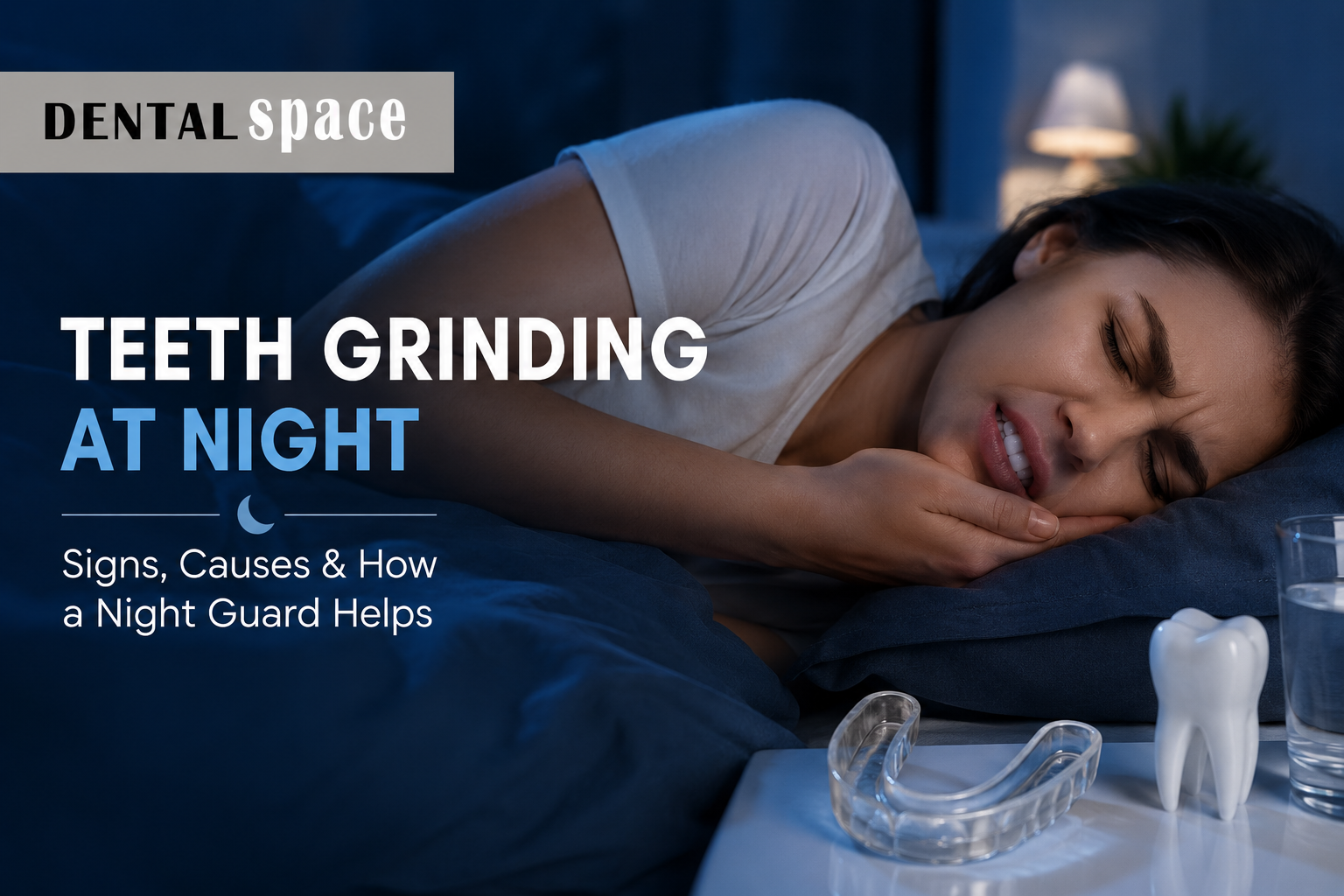
You wake up with an ache in your jaw. Your temples feel tight, almost like you did a workout in your sleep. Your partner mentions, half joking, that you sound like you are chewing on gravel at 3 a.m. If any of this sounds familiar, you are probably dealing with teeth grinding at night, and you are far from the only one.
At our clinic in Girgaon, we see this more often than most patients expect. It is one of those conditions people live with for months, sometimes years, before they realise it is not just “a bad sleep habit” but something that is quietly wearing down their teeth.
What Exactly Is Teeth Grinding at Night?
The clinical term is bruxism, but you do not need to remember that word to understand what is happening. When you grind your teeth at night, your jaw muscles clench and move your teeth against each other, usually without you knowing it is happening at all. It is involuntary. Most people find out from a partner, a parent, or during a routine dental check-up when they notice wear patterns themselves.
What makes teeth grinding at night tricky is that it doesn’t always come with obvious early warning signs. It builds up slowly. A little enamel wears away here, a muscle gets a bit tighter there, and by the time someone walks into our clinic complaining of jaw pain or sensitive teeth, the grinding has usually been going on for a while.
Why Do I Grind My Teeth in My Sleep?
This is the question we hear most, and honestly, there is rarely one single answer. In our experience, it is usually a mix of a few contributing factors rather than one clear cause.
Stress and Anxiety
This is the big one. Mumbai life does not slow down, and neither does the mind, even after the lights go off. Stress tends to show up physically, and for many people, it shows up in the jaw. Deadlines, family pressure, financial worry- it all has to go somewhere, and unfortunately, clenched jaws are a common outlet.
Misaligned Bite
Your upper and lower teeth don’t meet the way they should; your jaw may compensate by grinding to find a “comfortable” position. We check for this during a bite assessment because it’s as much a mechanical issue as a habit.
Sleep Disorders
There is a real connection between teeth grinding at night and conditions like sleep apnea. If you grind heavily and still wake up tired despite a full night’s sleep, mention both symptoms, as they may be linked.
Lifestyle Habits
Caffeine late in the day, alcohol before bed, smoking, and even certain medications can increase the likelihood of grinding. None of these is the sole cause, but they add fuel to the fire.
Signs You Might Be Grinding Your Teeth at Night
Most patients do not walk in saying “I think I grind my teeth.”0 They walk in with a list of unrelated complaints that, once we connect the dots, point straight to bruxism.
- Waking up with a painful or tight jaw
- Headaches, especially near the temples, first thing in the morning
- Increased sensitivity to hot or cold food
- Flattened, chipped, or worn-down teeth
- A partner mentioning grinding noises at night
- Unexplained tooth or gum pain with no visible cavity
- Difficulty opening your mouth wide without discomfort
If two or three of these sound familiar, it is worth getting it checked rather than waiting for it to get worse. Most people don’t realise that grinding doesn’t just affect your teeth. Over time, it can change the shape of your jaw muscles and even affect your facial symmetry.
What Happens If Teeth Grinding at Night Goes Untreated?
Here is where things get interesting, and not in a good way. Left unaddressed, grinding can lead to:
Enamel loss, which makes teeth more vulnerable to decay and sensitivity since enamel does not grow back once it is worn down.
Cracked or fractured teeth, especially in molars that bear the brunt of the grinding force.
TMJ disorders, which cause jaw pain, clicking sounds, and sometimes difficulty chewing comfortably.
Gum recession, because the excess pressure on teeth can push them slightly out of position over time.
We have had patients come in for what they thought was a simple filling, only for us to discover that years of untreated grinding had caused far more damage underneath the surface. Catching it early genuinely makes a difference, both to your comfort and to your wallet.
How a Night Guard for Teeth Grinding Actually Helps
This is usually where the relief comes in, quite literally. A night guard for teeth grinding is a customised device you wear while you sleep. It sits between your upper and lower teeth and acts as a cushion, absorbing grinding pressure so your teeth and jaw don’t take the full impact.
We do not believe in one-size-fits-all solutions here. A properly fitted night guard, made from an impression of your own teeth, feels completely different from an over-the-counter version you might pick up at a pharmacy. It sits comfortably, doesn’t shift while you sleep, and is built to last with your specific bite in mind.
What a Custom Night Guard Actually Does
- Reduces pressure on teeth and jaw joints
- Prevents further enamel wear
- Eases morning headaches and jaw soreness
- Protects existing dental work like crowns or fillings
- Improves sleep quality by reducing muscle strain
Patients are often surprised at how quickly they notice the difference, sometimes within the first week of consistent use. Jaw tightness eases, morning headaches become less frequent, and sleep starts to feel more restful rather than something your body is working through.
Managing Stress Alongside Treatment
Since stress plays such a large role in teeth grinding at night, a night guard works best alongside a few lifestyle adjustments. Cutting back on caffeine after mid-afternoon, being mindful of jaw tension during the day, and simple relaxation practices before bed can all support the treatment rather than replace it. We are always happy to talk through what might work for your specific routine during your visit.
Getting It Checked Is Simpler Than You Think
If you wake up with a sore jaw, notice wear on your teeth, or your partner keeps mentioning strange nighttime noises, it is worth a conversation rather than a guessing game. At DentalSpace, we start with a simple bite and jaw assessment to understand what is actually going on before recommending anything, including whether a custom night guard makes sense for you.
Teeth grinding at night is manageable once you know what you are dealing with. The sooner you address it, the less wear your teeth and jaw have to absorb in the meantime. If any of this sounds familiar, drop by the clinic in Girgaon for a check-up; we will help you figure out exactly what your smile needs.