


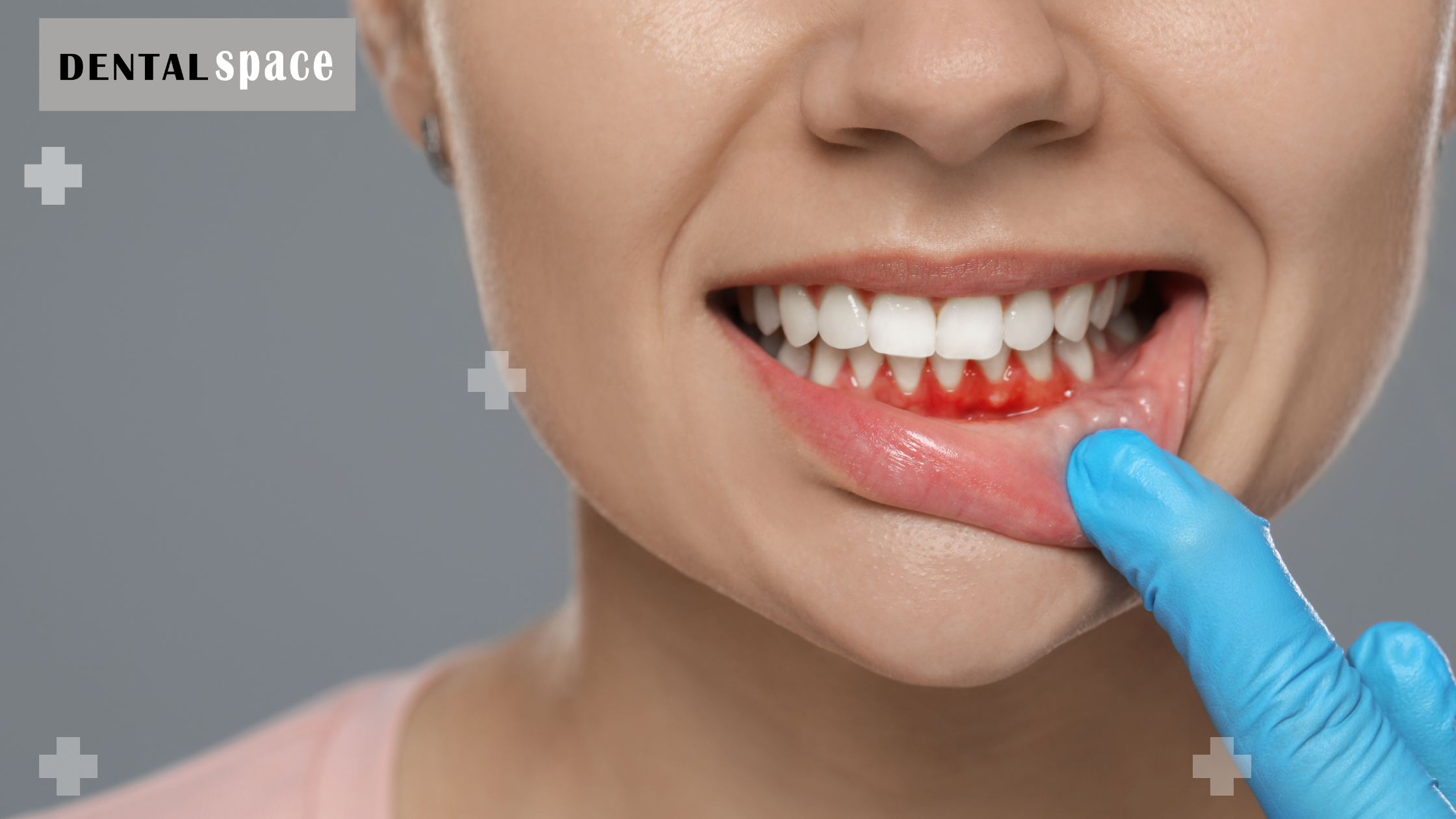
Most people notice it the wrong way: a friend mentions their teeth look “longer,” or they suddenly wince at a sip of cold coffee that never used to bother them. Sometimes it’s just a slow, creeping sensitivity that builds over months until it’s impossible to ignore.
Receding gums rarely announce themselves dramatically. They retreat quietly and gradually, and by the time most people realise something is wrong, the recession has already been underway for some time.
That’s the thing about gum recession that makes it genuinely worth understanding, not just as a cosmetic concern but as a health concern. Because what starts as exposed tooth roots and mild sensitivity can, if left unaddressed, lead to bone loss, loose teeth, and tooth loss. None of that is inevitable. But it does require paying attention to the early signs rather than waiting for things to feel urgent.
Here’s what’s actually happening when gums recede, why it happens, and what receding gums treatment looks like today.
What Is Gum Recession, Exactly?
Your gums are meant to form a tight, protective seal around the base of each tooth, covering the roots and holding everything in place. When that gum tissue starts to pull back or wear away, it exposes the underlying root surface. That exposed root isn’t covered by enamel the way the crown of your tooth is, which is why recession tends to come with increased sensitivity. The root surface is more porous, more vulnerable, and far more susceptible to decay.
What most people don’t realise is that gum recession is not just a surface-level issue. The gum tissue sits above the supporting bone. When gums recede significantly, the underlying bone often begins to deteriorate as well, and bone, unlike gum tissue, does not grow back on its own.
This is why early detection matters enormously. A mild recession can be managed and stabilised with relatively straightforward treatment. Advanced recession requires far more involved intervention.
Gum Recession Causes: Why Does It Happen?
There’s no single answer here; the causes of gum recession vary from person to person, and quite often multiple factors are at work. Understanding what’s driving the recession is essential to treating it effectively, because the same treatment applied to two different causes will yield very different results.
Gum Disease (Periodontitis)
This is the most common and most serious cause. Periodontitis is a bacterial infection of the gum tissue and the bone that supports the teeth. It begins as gingivitis, redness, swelling, occasional bleeding when you brush, and, if left untreated, progresses into a deeper infection that destroys both gum and bone tissue.
The bacteria don’t just sit at the gum line. They work their way into the space between the gum and the tooth, a pocket, and cause progressive, irreversible damage from the inside. By the time the recession becomes visible, the disease has usually been active for some time.
Brushing Too Hard
Here’s something that surprises most patients: aggressive brushing is one of the most common contributors to gum recession, and it comes entirely from good intentions. People who feel that brushing harder means brushing better are, over time, physically wearing away the gum tissue along with plaque and debris.
It’s a slow erosion; no single brush stroke causes it, but months and years of incorrect brushing technique add up. A medium or hard-bristled toothbrush used with force is particularly damaging. Soft-bristled brushes with a gentle, circular technique are almost always recommended instead.
Genetics and Thin Gum Tissue
Some people simply have thinner, more fragile gum tissue, and there’s nothing behavioural about it. Thin gum biotype is a genetic trait that makes the tissue more vulnerable to recession, even with perfectly adequate oral hygiene. If a history of recession runs in your family, this may be a contributing factor worth discussing with your dentist.
Grinding and Clenching (Bruxism)
The forces generated by grinding teeth, especially at night, when most people are entirely unaware they’re doing it, place enormous stress on the teeth and the surrounding tissues. Over time, this can contribute to gum recession and other structural damage. Many patients are surprised to learn that their gum problems are partly connected to a habit they didn’t even know they had.
Misaligned Teeth or Bite Issues
When teeth are crowded or misaligned, certain teeth may bear disproportionate bite pressure. That concentrated force can, over time, cause the gum and bone around those teeth to recede. This is one reason why orthodontic treatment, getting teeth properly aligned, can have genuine long-term gum health benefits beyond aesthetics.
Tobacco Use
Smoking and chewing tobacco affect blood flow to the gum tissue, impair the immune response, and significantly increase the risk of gum disease. Tobacco users are considerably more susceptible to recession, and their gum tissue tends to respond less effectively to treatment.
Warning Signs to Watch For
Because the recession is gradual, the warning signs are easy to dismiss individually. Together, they’re worth taking seriously.
Tooth sensitivity, particularly to cold, hot, or sweet foods and drinks, is often the first thing people notice. The exposed root surface is directly to blame for this.
Teeth that look longer than they used to this is the visual hallmark of recession. If you look at old photos and your smile looks different, it may not be your imagination.
A notch you can feel at the gum line, running your tongue or fingernail along the base of a tooth and feeling a slight dip or groove is a sign of root exposure.
Bleeding gums when brushing or flossing, not dramatic bleeding, but a persistent pinkish tinge on your toothbrush that shouldn’t be there.
Loose teeth or shifting signal that the underlying bone support may already be compromised and require immediate professional assessment.
If any of these are familiar, the best thing you can do is book a proper gum evaluation rather than wait to see if it improves. It almost never does on its own.
Receding Gums Treatment: What Are the Options?
The right receding gums treatment depends entirely on how far the recession has progressed and what’s causing it. At DentalSpace, the first step is always a thorough assessment: measuring the depth of the gum pockets, evaluating bone levels with digital X-rays, and identifying the patient-specific contributing factors. Treatment without understanding the cause is just putting a patch over a leak.
Deep Cleaning, Scaling and Root Planing
For mild to moderate recession caused by gum disease, the first-line treatment is a professional deep cleaning called scaling and root planing. This goes significantly beyond a standard cleaning; the dentist cleans below the gum line, removing bacteria, tartar, and infected tissue from the root surfaces and pockets.
This procedure allows the gum tissue to heal, reduces pocket depth, and stops the progression of disease. It’s non-surgical and, at DentalSpace, performed with a comfort-first approach; local anaesthesia is used so patients feel nothing beyond mild pressure.
For many patients caught at the right stage, deep cleaning combined with improved home care is enough to stabilise the gums and halt further recession.
Gum Graft Surgery
Where recession is more advanced, particularly where significant root exposure has occurred, a gum graft may be recommended. This is a surgical procedure in which tissue is taken from the palate (roof of the mouth) or from a donor source and used to cover the exposed root surface and rebuild the gum line.
It sounds involved, and it is, but the results are genuinely transformative. Not just aesthetically, but functionally. Patients experience reduced sensitivity, improved gum stability, and protection of the underlying bone. Recovery is typically manageable within a week or two.
Treating the Underlying Cause
Any receding gums treatment that doesn’t also address why the recession happened in the first place is incomplete. If bruxism is a factor, a custom nightguard will be recommended. If the brushing technique is the problem, that gets corrected, with proper guidance, not just a passing mention. If misalignment is contributing, orthodontic options will be discussed.
Treating gum recession without addressing the cause is like mopping a floor without turning off the tap.
Ongoing Monitoring and Maintenance
Once the recession is stabilised, regular professional monitoring is essential. At DentalSpace, we track gum pocket depths at every hygiene visit, watch for any further progression, and adjust the maintenance plan as needed. Gum health isn’t a one-time fix; it’s an ongoing relationship between what happens in the clinic and what happens at home.
One Thing Worth Saying Directly
Gum recession doesn’t reverse on its own. The tissue that has already retreated will not grow back without treatment. But the damage that’s already happened doesn’t have to keep happening, and in most cases, with the right intervention at the right time, the situation is very much manageable.
The patients we see who do best are the ones who came in early, not because they were panicking, but because something felt slightly off and they didn’t ignore it.
If your gums have been bleeding, your teeth feel more sensitive than they used to, or your smile just looks a little different than it did a year ago, that’s worth looking into. At DentalSpace in South Mumbai, we’ll take a proper look, give you a clear picture of what’s happening, and put together a plan that actually makes sense for your specific situation.
Healthy gums are the foundation of everything else in your mouth. They deserve at least as much attention as your teeth do.
DentalSpace | Girgaon, South Mumbai | Gum Treatment, Root Canal, Dental Implants, Smile Design & More
Book a consultation via WhatsApp or call us directly.