

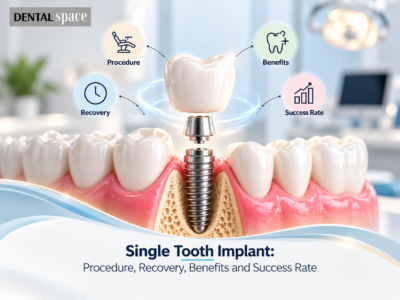
A missing tooth isn’t always your own private business. You notice it in pictures, then when you chew on that particular side, and eventually as neighbouring teeth begin to lean toward the gap in an uncomfortable way. A single tooth implant solves all of that with a small titanium root set into the jawbone, topped with a crown shaped to match its neighbours. Dental implants for missing teeth have been refined over decades, and the single-tooth version remains the cleanest expression of the idea. One root, one crown, without disturbing the surrounding teeth.
Who It Takes To Be A Suitable Candidate For Implant
Most healthy adults with a missing tooth and enough jawbone to hold an implant qualify. The gums need to be free of active disease, which is why a periodontal assessment comes first. Smoking and poorly controlled diabetes can slow healing, so those conversations happen early. Where bone has thinned after a long gap, a bone graft can rebuild the foundation beforehand. That adds time and expense, yet it often separates an implant that settles from one that struggles. Age alone is rarely the barrier. Healthy bone and healthy gums count for far more than the number on a birth certificate.
The Procedure, From First Scan to Final Crown
It begins with a detailed assessment, conversation, and a scan. X-rays or a 3D scan reveal the bone’s height and width and the position of nerves and sinuses, so the dentist can plan the implant to the millimetre. On the day of the procedure, the area is numbed with local anaesthesia, and sedation is available for anxious patients. The dentist makes a small opening in the gum, prepares a channel in the bone, and seats the implant. A straightforward case takes roughly 30 to 90 minutes.
Then comes the quiet stretch. Over the next few months, typically three to six, depending on bone quality and site, bone grows against the titanium surface and locks it in place, a process called osseointegration. Once the implant is secure, a small abutment is attached to properly connect it, and the crown follows upon it. It’s made in a lab, colour-matched to the adjacent teeth, and fitted to meet your bite without strain.
Recovery: What the First Weeks Feel Like
Expect tenderness, mild swelling, and sometimes a little bruising for a few days. Most people return to their routine within about a week, though soft foods are best early on. A cold compress and a soft serve ice cream might help on the first day. Brush as usual, gently around the area, which can be a little uncomfortable and sometimes painful, and use any rinse or mouthwash that your dentist will prescribe. Swelling tends to peak in the first couple of days and then fade, which is useful if you’ve planned a dinner or meeting for day two. If pain climbs instead of easing, call the clinic rather than waiting it out.
Two things matter more than comfort. Smoking during healing raises the risk of failure, so pause and be mindful about it. Do not skip your review appointments even when everything feels fine. Quiet healing is better healing, and your dentist checks what you can’t feel.
Benefits That Outlast the First Fitting
An implant stands alone; unlike a traditional bridge, it does not require filing down the healthy teeth on either side to support a crown. It also gives the jawbone something to hold on to: bone that loses its tooth tends to shrink over time, and a root in place helps preserve it. You clean it the way you clean your own teeth. You bite into an apple or a corn cob without wondering whether anything will shift.
Implant, Bridge or Denture: What Suits You
Dental implants for missing teeth sit alongside two older options, and each has its place. A bridge anchors a false tooth to the teeth on either side, lowering the amount of healthy enamel to support it. A removable denture is the most affordable route and can suit someone with several gaps, though it moves, needs daily removal, and does nothing for the bone beneath. A single tooth implant stands apart because it replaces both the root and the crown, and it asks nothing of its neighbours. For one lost tooth with sound teeth around it, that independence is usually the deciding argument.
The Success Rate, and What Sits Behind It
Modern single implants commonly show survival rates of 95 to 98 per cent over five to ten years. One specialist centre followed more than 3,000 single implants placed over 31 years and described the treatment as predictable in the long term, with no failures reported after ten years among those followed up for that long.
Success in the procedure isn’t guaranteed, though. Infection of the tissue around an implant, called peri-implantitis, affects roughly 5 to 10 per cent of implants over time, and smoking or heavy grinding raises the odds of trouble. The crown takes the daily wear and may need replacing after ten to fifteen years, even when the implant beneath it is sound. Regular check-ups protect the result far more than any single product choice.
Single Tooth Implant Cost in India, Without the Fog
Single tooth implant cost in India varies widely. For the implant, the abutment is important for the connection between the implant and the mouth, and the crown together; figures between ₹30,000 and ₹65,000 are commonly estimated, and premium systems or added bone work can push the total higher. Look closely at what a quote includes. Some clinics price only the titanium fixture and bill the abutment, crown, and scans separately, making two quotes hard to compare fairly.
Weigh it over time as well. An implant costs more upfront than a bridge, yet after seven to ten years, spending may even out. If a bridge needs replacing, it can be costly. The fairest price is the one explained to you in full before treatment begins.
Choosing the Hands That Place It
Skill sits at the centre of a good result. Dr Payal Agarwal, Director of DentalSpace, holds master’s degrees in Periodontics, Implantology and Restorative Dentistry (Singapore and Edinburgh) and has over twenty years of experience. That mix suits implant work: healthy gums hold an implant in place, and a well-built crown protects it. Comfort is part of the brief too. The Girgaon clinic, near Charni Road, keeps waiting to a minimum, explains pricing openly, and keeps each visit gentle.
If a gap has quietly shaped how you smile and chew, a consultation will show what your bone and gums allow, and what a single tooth implant would involve for you.