
Most people searching for clear aligners vs. braces have already settled the first question: their teeth need straightening. What they cannot decide, though, is which option will fit around a full work week and a social life for the next year or two, since it's a long-term commitment. Which one works better for you depends …


Most people searching for clear aligners vs. braces have already settled the first question: their teeth need straightening. What they cannot decide, though, is which option will fit around a full work week and a social life for the next year or two, since it’s a long-term commitment. Which one works better for you depends mostly on your teeth, then on how you live, then on what you can spend.
How Both Will Affect Your Teeth
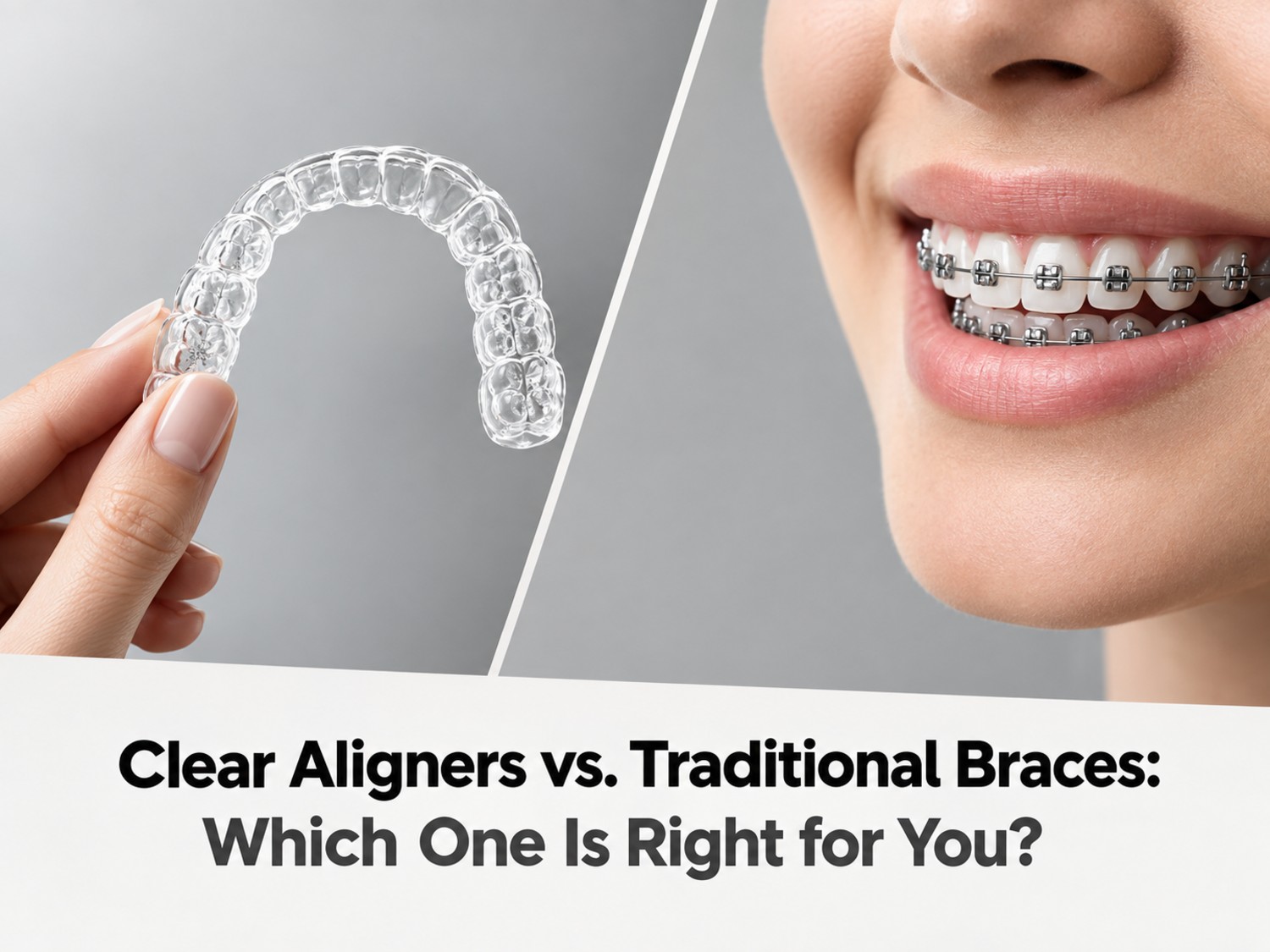
Braces are brackets connected to the teeth and joined by a wire. The wire applies steady pressure, and the dentist adjusts it every four to six weeks. You cannot take braces off, which is both a drawback and a strength: they work every hour of the day, whether you feel disciplined or not, but at the same time it can feel like an obstacle.
Clear aligners are thin, removable plastic trays made from a digital scan of your mouth. Each set moves your teeth a little, and you switch to the next tray every week or two. Small tooth-coloured bumps called attachments are often bonded to a few teeth so the trays have something to grip.
Invisalign is the best-known clear aligner brand, and it’s usually the first name patients bring up. That is why Invisalign vs braces is the version of the question most people type into Google, even though other aligner brands exist.
Invisalign vs braces: what daily life feels like
Aligners need to stay in for about 20 to 22 hours a day. You take them out to eat and drink anything other than water, then brush before you put them back in. Nobody in a client meeting will spot them, and flossing stays easy, which people with brackets often find fiddly.
The catch is discipline. Aligners that live in a handbag or get wrapped in a napkin at lunch, which is a very common way to lose them, aren’t really moving anything in your mouth. If you know you will forget, or you graze all day, be honest about that before you choose.
Braces ask less of your memory and more of your diet. Hard chikki and sticky toffee are off the menu, and food can get caught around the brackets, so brushing takes longer. Some people experience irritation or small sores during the first couple of weeks. Still, there’s nothing to lose and nothing to remember.
For comfort, Invisalign usually wins over braces. Expect a dull ache for a day or two with each new tray, while wires can rub the inside of the cheeks.
Is Invisalign better than braces?
For looks and comfort, often yes. For difficult tooth movements, not always.
Aligners handle mild to moderate crowding and gaps well. Braces still have the edge for severe crowding and jaws that don’t meet properly, which is challenging to tackle with Invisalign because a fixed wire gives the dentist more control. So when someone asks if Invisalign is better than braces, the fair answer is yes for the right case. For the wrong one, it can mean extra months and rounds of refinement trays.
That is why the scan and X-rays matter more than the brand. A good dentist will tell you which way your case leans, even if it isn’t the option you walked in wanting.
Treatment time in clear aligners vs. braces depends more on the case than the appliance. Aligners are commonly quoted at 6 to 18 months for suitable cases, braces at 12 to 24. Retainers come after either option, and teeth drift back if you skip them.
Clear aligners vs. braces cost in India
Cost is where the conversation gets honest. The clear aligners vs. braces cost gap is real. Metal braces usually sit at the lower end, often starting in the tens of thousands of rupees, with ceramic braces costing more. Invisalign typically costs between ₹1.5 lakh and ₹3.5 lakh, which is a significant gap, while other clear aligner brands can be lower. Those numbers vary widely by clinic and city, so treat them as an estimate, not a quote.
Is Invisalign better than braces when money is tight? The answer is almost certainly NO. If your case is straightforward, braces may do the job for a lot less.
What a clear aligners vs. braces cost comparison tends to miss is everything around the price tag. Braces mean more visits, which means time off work. Aligners can add cost if you lose a tray or need end-of-treatment refinements. So when you compare clear aligners vs. braces cost between clinics, ask what’s included: refinement trays and retainers, and what happens if a tray cracks. At DentalSpace, we explain pricing after a consultation, so the figure you get is for your teeth, not an average.
Clear aligners vs. braces: who each one suits
A useful way to think about clear aligners vs. braces is convenience versus control. Aligners suit adults with mild to moderate problems who present to clients, sit on camera, or don’t want metal in their mouths, provided they can keep to a routine. Braces suit complex cases, and they suit many teenagers, mostly because a fixed appliance can’t be left on a canteen table. Is Invisalign better than braces for a 14-year-old? Sometimes, if they’re reliable about wearing the trays, but a parent should expect to check.
With Invisalign vs. braces, part of the decision is how much of the treatment you want to manage yourself.
Choosing between them
Book a consultation before you settle the clear aligners vs. braces question. Ask for a digital scan or X-rays, and ask the dentist plainly: Are my teeth a good aligner case? How many refinements are typical? What happens if I stop wearing the trays? Get the clear aligners vs. braces cost in writing, retainers included.
If you’re in South Mumbai, dentists at DentalSpace near Charni Road and Marine Lines can review Invisalign vs. braces options using your scan, and it’s worth hearing from a trusted dentist before you spend anything, since not everything suits everyone.
Neither option is a shortcut, and neither is a mistake. The clear aligners vs. braces decision comes down to what your teeth need and how much you’re willing to manage yourself, with your budget setting the limits. Get your teeth assessed, ask the awkward questions, and pick the system you will actually stick with. That matters more than any brand name.
Book a Consultation
It’s easy and free!