

Most parents notice it somewhere between class 3 and class 6. The milk teeth are gone, the adult teeth have come in — and they've come in crooked, crowded, or not quite where they should be. You start wondering if it's too early to act. Or maybe too late. Someone at a family gathering says, …


Most parents notice it somewhere between class 3 and class 6. The milk teeth are gone, the adult teeth have come in — and they’ve come in crooked, crowded, or not quite where they should be. You start wondering if it’s too early to act. Or maybe too late. Someone at a family gathering says, “wait till they’re older,” while a friend insists her daughter got braces at nine and it changed everything.
The truth is, the best age for braces isn’t a single number. It depends on your child’s dental development, jaw growth, and the specific problem that needs correcting. What we can tell you — from over two decades of treating children in South Mumbai — is that timing matters far more than most parents realise. Getting it right means shorter treatment, better results, and a child who carries a confident smile into adulthood.
Here’s what every parent should know.
First, the Orthodontic Evaluation: Earlier Than You’d Expect
The American Association of Orthodontists recommends that children have their first orthodontic evaluation by age 7. That might sound surprisingly young — most kids still have a mix of baby and adult teeth at that point — but that’s precisely why it’s valuable.
At age 7, enough adult teeth have typically emerged to give an orthodontist a clear picture of how the jaw is developing and whether the incoming teeth have the space they need. Problems like a narrow palate, a crossbite, or significant crowding are far easier to address during active jaw growth than after it stops.
This early evaluation isn’t always a prescription for braces. Quite often, the outcome is “let’s monitor this and revisit in a year.” But catching certain issues at this stage opens up interceptive options that simply aren’t available later — and that’s a window worth knowing about.
Phase 1 Treatment: Ages 7–10
Some children benefit from what orthodontists call Phase 1 — or early interceptive — treatment. This doesn’t always mean traditional braces. It might involve a palate expander, space maintainers, or partial braces on just a few key teeth.
The goal at this stage isn’t full alignment. It’s creating the right conditions for the remaining adult teeth to erupt properly. Think of it as preparing the stage before the main performance.
Phase 1 treatment is typically recommended when a child has:
- A crossbite, where upper and lower teeth meet incorrectly, can affect jaw growth if left uncorrected
- Significant crowding, where there simply isn’t enough space for adult teeth to come in
- A severely protruding upper jaw or “buck teeth”, which can cause both functional problems and a higher risk of dental trauma
- Habits like prolonged thumb-sucking that have begun to alter the shape of the palate or the bite
Not every child needs Phase 1 treatment. But for those who do, addressing these issues early can reduce the complexity — and sometimes the duration — of comprehensive braces treatment later.
The Sweet Spot: Ages 11–14
For the majority of children, the best age for braces on teeth falls between 11 and 14. This is when most, if not all, adult teeth have erupted, and the jaw is still actively growing — making teeth far more responsive to orthodontic movement than they would be in adulthood.
Here’s where things get interesting: orthodontic treatment works by applying gentle, consistent pressure that causes the bone surrounding tooth roots to remodel. In adolescents, that bone remodelling happens faster. Treatment that might take 30 months in an adult can often be completed in 18–24 months in a teenager. The biology is simply more cooperative.
This window — post-milk teeth, pre-skeletal maturity — is what orthodontists consider the ideal treatment period. It’s when comprehensive braces for teeth can deliver the most efficient, lasting results.
What Affects the Right Age for Your Child Specifically?
Every child’s dental development is unique, and a few factors will significantly influence when braces make sense for them:
Rate of Dental Development
Some children lose their baby teeth and gain adult teeth earlier or later than average. The right age for braces is guided less by the calendar and more by how many adult teeth are present and how the jaw is developing.
The Type of Orthodontic Issue
Spacing and mild crowding can often wait until all adult teeth have erupted. But jaw discrepancies — an underbite, a crossbite, severe protrusion — are better addressed while jaw growth is still ongoing and can be guided. Waiting too long on these specific problems can turn a manageable orthodontic issue into one that eventually requires surgical intervention.
Compliance and Readiness
This one does not come up in clinical textbooks but matters enormously in practice. A younger child who won’t cooperate with wearing a removable appliance is often better served by waiting. Braces are only as effective as the patient who wears and maintains them. In our experience, children who begin treatment with a basic understanding of why they’re doing it — and some buy-in of their own — consistently have smoother journeys.
Traditional Braces vs. Invisalign for Teenagers
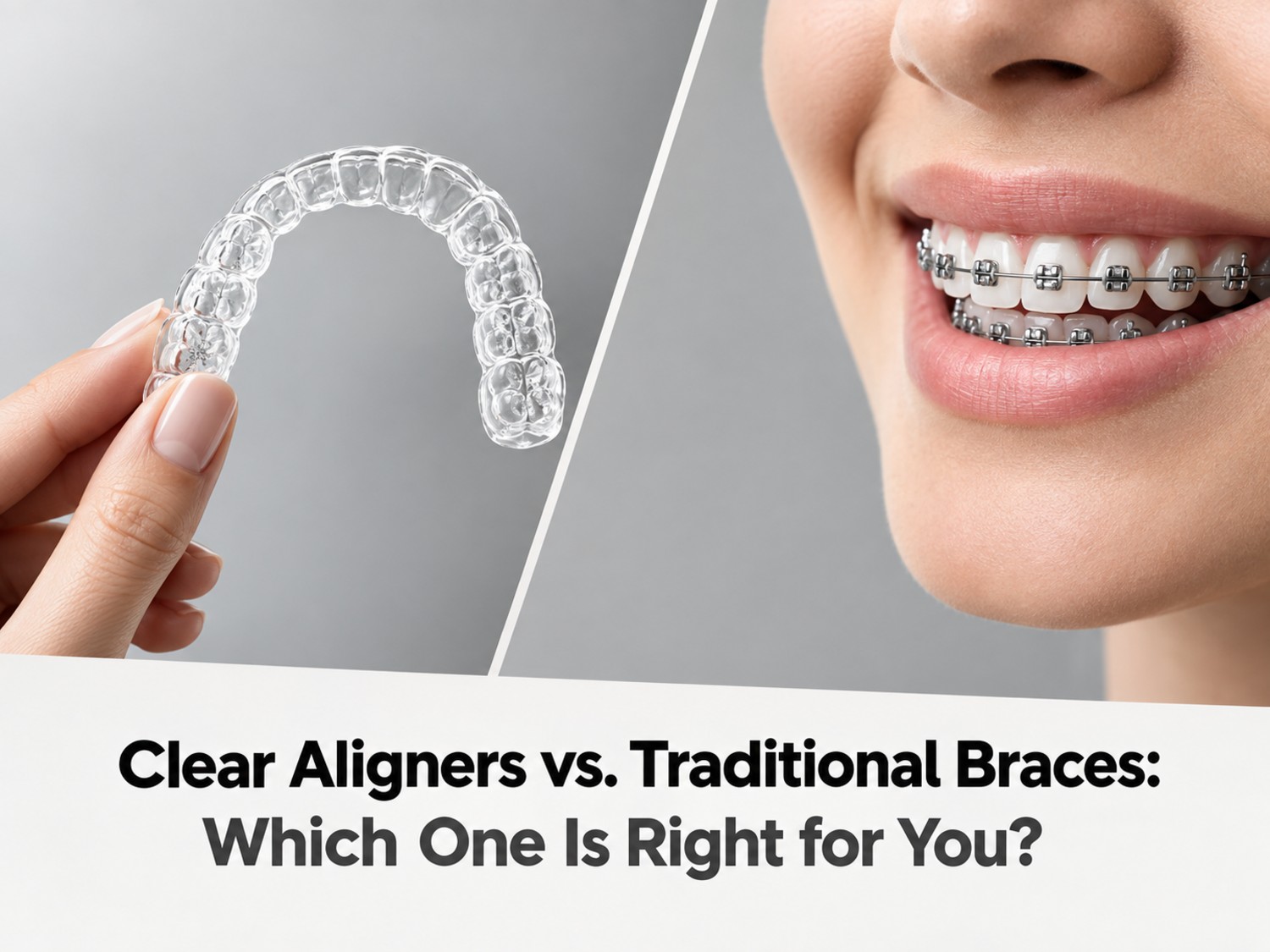
Once a child is in that 11–14 window, the next conversation is usually about the type of orthodontic treatment. Traditional metal braces remain the most effective option for complex cases — they give the orthodontist precise control over tooth movement and are non-removable, which means consistent force without relying on a child remembering to wear an aligner.
Invisalign Teen is a popular alternative, particularly for self-conscious adolescents who are reluctant to wear visible brackets. Clear aligners are virtually invisible, removable for eating and brushing, and increasingly effective for a wide range of alignment issues. The trade-off is that they require discipline — aligners need to be worn 20–22 hours a day to work as intended.
At DentalSpace, we use digital precision planning for both traditional braces and Invisalign, which means every treatment is mapped out before a single bracket is placed or aligner is fitted. That planning accuracy matters — it’s the difference between treatment that runs to schedule and treatment that keeps getting extended.
What Happens If You Wait Too Long?
Adult orthodontic treatment is absolutely possible — and increasingly common. There’s no age after which braces can’t work. But there are real trade-offs to waiting past adolescence.
Bone density increases with age, which means teeth move more slowly and with more resistance. Treatment timelines tend to be longer. Certain jaw discrepancies that could have been corrected with a palate expander in a 9-year-old may require orthognathic surgery in a 25-year-old. And practically speaking, many adults feel more self-conscious about wearing braces during professional or social life.
None of this means you’ve missed the boat if your teenager is 16 or 17 and hasn’t started yet. But it does reinforce why the 11–14 window is genuinely the most efficient time to act — and why an earlier evaluation at 7 is worth the visit, even if no treatment is recommended right away.
A Note on Monitoring Between Visits
One thing parents often underestimate is how many changes in a child’s mouth occur between annual check-ups. A tooth that had plenty of space at age 9 can become significantly crowded by 11 as other adult teeth continue erupting. Regular dental visits — not just for orthodontic concerns, but for overall oral health — make it far easier to catch these shifts before they compound.
At DentalSpace, our paediatric and orthodontic teams work closely together. If we notice something during a routine check-up that warrants an orthodontic conversation, we bring it up directly — not in jargon, but in plain language that both parent and child can understand.
Helping Your Child Through Braces
Starting braces is a milestone, and for many children, it comes with mixed feelings. Excitement about the result sits alongside anxiety about discomfort, food restrictions, and how they’ll look. These are real concerns worth taking seriously.
A few things that make a meaningful difference: clear explanations before each appointment so children know what to expect; a clinic environment that is calm and genuinely child-friendly; and a team that communicates with the child directly, not just over their head at the parent. Small things — like taking a moment to show a child their progress in the mirror — build the kind of trust that makes the whole journey easier.
The Right Time Is Sooner Than Most Parents Think
The best age for braces isn’t fixed — but early evaluation, around age 7, and comprehensive treatment between 11 and 14 tends to produce the most efficient outcomes with the least intervention. Waiting until problems are visually obvious often means waiting too long.
If your child is approaching that window — or if you’ve noticed crowding, spacing, or bite issues that concern you — a consultation is the clearest way to get actual answers rather than guesswork.
The team at DentalSpace treats both the youngest patients and their families with the same patience and transparency we’d want for our own children. If you’d like to have that conversation, we’re here.
Book a Consultation
It’s easy and free!